
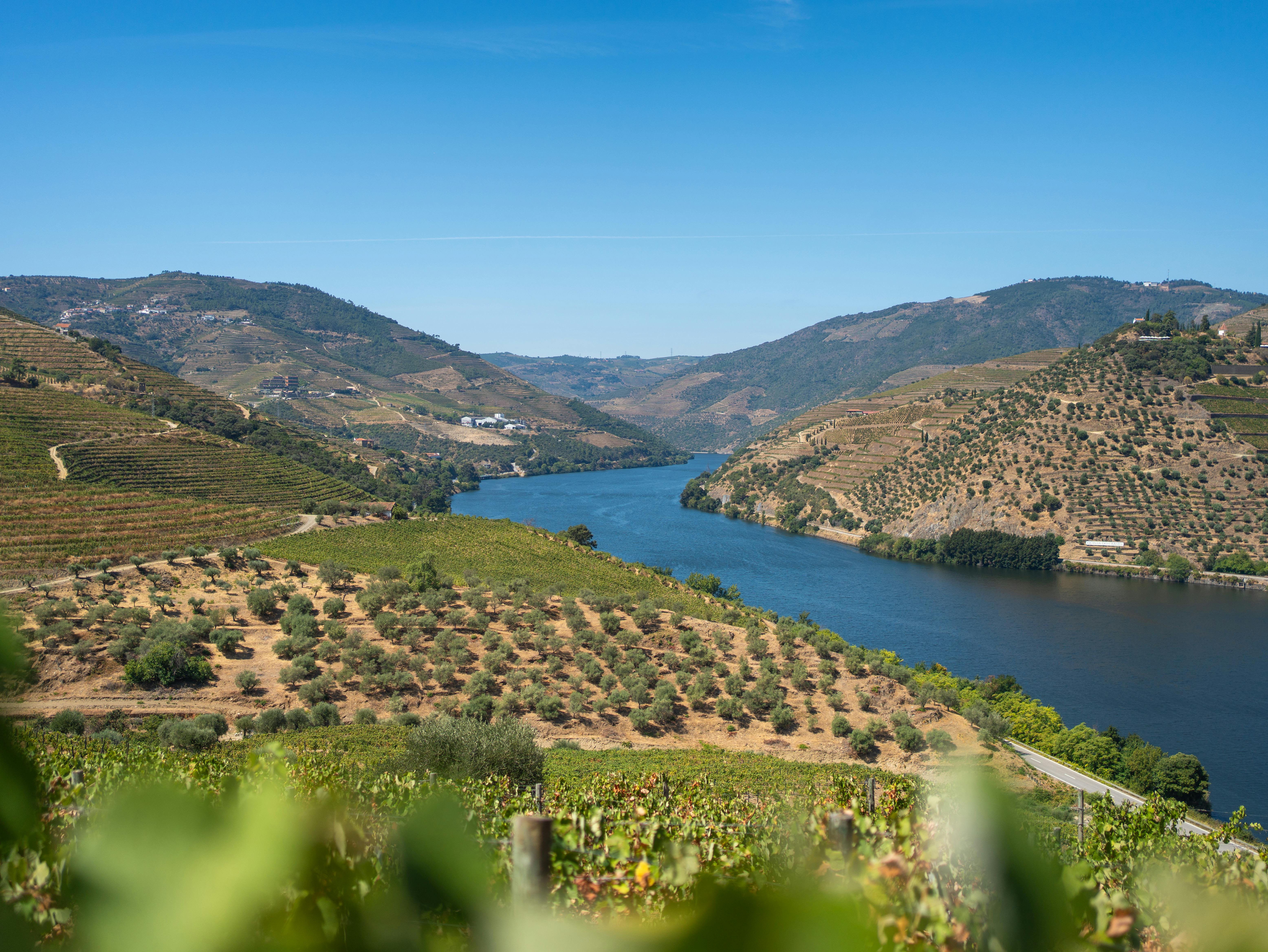
Vineyards of the Douro
The Douro Valley is one of the most beautiful and iconic regions in Portugal. Known for its steep terraces, winding river, and world-famous Port wine, it is also one of the oldest officially recognized wine regions in the world. Its vineyards tell a story of hard work, tradition, and a deep connection between people and the land.
An Historic Wine Area & The Origin of Port Wine
Winemaking in the Douro goes back thousands of years. Ancient peoples were the first to plant vines, and later the Romans expanded the vineyards and introduced new farming techniques. Over centuries, farmers carved terraces into the hillsides to plant more vines and protect the soil. By the Middle Ages, Douro wines were already traded across Europe and known for their strong character.
In the 17th century, Port wine brought international fame to the region. British merchants began buying Douro wine but needed it to survive long sea voyages. To preserve it, producers added a small amount of grape spirit during fermentation. This stopped the process early, keeping the wine naturally sweet and creating the rich, fortified wine we now know as Port. It became extremely popular, and demand grew quickly. In 1756, the Douro Valley was officially demarcated, making it one of the first regulated wine regions in the world.


The Landscape of the Douro
The Douro is unlike any other wine region. Its steep hills rise sharply above the river, covered with stone terraces called socalcos, built by hand. These terraces make it possible to grow vines on slopes that would be too steep for normal farming. They also help prevent erosion and protect the soil. Some of the oldest terraces are still in use, while newer, wider ones allow tractors and modern equipment to reach the vineyards.
The region has a challenging but ideal climate for growing powerful, flavorful grapes. Summers are hot and dry, while winters can be cold. The valley’s schist soil is poor in nutrients, forcing vines to grow deep roots, which creates more concentrated grapes. Each part of the valley—Baixo Corgo, Cima Corgo, and Douro Superior—has its own climate and personality, producing different styles of wine.
How Douro Wine Is Made – Tradition and Innovation
The Douro is famous for its traditional winemaking methods. One well-known practice is grape stomping in stone tanks called lagares. At some wineries, people still crush grapes by foot during harvest. This gentle process avoids bitterness and helps extract rich color and aroma. Many vineyards are also harvested by hand because machines cannot easily operate on the steep slopes. Tradition remains a key part of the region’s identity.
Modern technology also plays an important role. Stainless steel tanks, temperature control, and advanced pressing systems help produce consistent, high-quality wines. Better irrigation and careful vineyard management help winemakers deal with the intense summer heat. Many wineries now combine traditional and modern methods, balancing heritage with innovation.
Wines from the Douro
Port wine is the most emblematic product of the Douro region. It is available in various types: Ruby, Tawny, Vintage, and White Port, each providing distinct flavors and aging possibilities. Ruby Ports are colorful and lively, whereas Tawnies acquire nutty, caramel flavors as they age. Vintage Ports, produced during outstanding years, have the potential to mature for many years.
- Douro DOC Vintages
Alongside Port, the area also generates outstanding still wines bearing the Douro DOC designation. These consist of red, white, and rosé wines crafted from indigenous grape varieties such as Touriga Nacional, Touriga Franca, and Rabigato. Douro reds are recognized for their intense color, robust structure, and fruity scents, whereas whites may be crisp and mineral or more opulent and full-bodied, influenced by the grape-growing regions.

Douro Valley Now – Wine Tourism & Regional Heritage
The Douro is now one of Portugal’s top wine tourism destinations. Visitors can tour vineyards, taste wines, and learn about both traditional and modern winemaking. River cruises are especially popular, offering peaceful views of the dramatic slopes and terraced vineyards.
Wine is an essential part of local culture. The harvest season, called vindima, is celebrated with music, food, and community events. Small villages keep old traditions alive, and many family-owned estates continue to use methods passed down through generations.
Exploring the Douro – Vineyard Activities
The region is perfect for scenic travel. The N222 road, often considered one of the most beautiful drives in the world, follows the river and offers breathtaking views. Train rides along the Douro River are another great option, providing a relaxed and picturesque way to see the valley.
Visitors can join guided tours, walk through vineyards, enjoy tastings, or even participate in grape stomping during harvest. Many estates offer picnics, wine-paired meals, and stays in traditional quintas – historic wine houses surrounded by nature.
